A version of this article ran in the August 1 issue of Bicycle Retailer & Industry News.
WASHINGTON (BRAIN) — More than 10 months after Customs and Border Protection blocked U.S. imports from Giant Group’s Taiwan factory over alleged forced labor violations, there is little sign of resolution, despite the company’s reforms.
Legal experts and recent history suggest it could be more months — even years — before CBP lifts or modifies the Withhold Release Order it imposed last September.
Giant USA — and other U.S. brands that have bikes built by Giant’s factories — can continue to import products made in Taiwan-based company’s facilities in Vietnam, China, the Netherlands or Hungary.
But U.S. dealers told BRAIN they have been unable to get higher-end carbon fiber Giant models and some mid-priced aluminum-framed bikes because of the WRO. When Giant unveiled new high-end road bikes in June to the cycling media, it had to note that the models (the men’s Revolt and women’s Liv Devote ) will be unavailable indefinitely in the U.S. due to the WRO.
The CBP can impose WROs when it obtains evidence that creates a reasonable suspicion that merchandise was produced wholly or in part using forced labor. WROs bar imports from being released to the market by Customs. Giant said last fall that it had stopped or diverted shipments bound for the U.S. from its Taiwan factories immediately, so no shipments have been held up in Customs.
18 months is not typical — it's short
WROs are relatively rare: The CBP has issued just 27 since 2020. But once imposed, they are not often or quickly lifted.
For example, in 2021 CBP imposed an WRO on the Malaysian palm oil and latex glove industries (CBP press release). It took about 18 months before CBP lifted the WRO for some Malaysian glove makers that showed they had eliminated forced labor at their operations.
“(18 months) is about as fast as I’ve seen it happen” — trade law expert Nicole Bivens Collinson
The Washington law firm Sandler, Travis & Rosenberg represented SmartGlove, one of the glove makers that got its WRO modified. Asked if 18 months was a typical time period for an WRO modification, the firm’s Nicole Bivens Collinson told BRAIN it was not at all typical. Rather, she said, “That’s about as fast as I’ve seen it happen.” Collinson is the firm’s managing principal and an international trade and government relations expert.
Of the 27 WROs imposed by the CBP since 2020, two escalated into “findings” — meaning CBP concluded its investigation and determined there was solid evidence of forced labor, allowing merchandise to be seized and forfeited.
More positively, in eight cases since 2020, the CBP has lifted or modified WROs. Of those eight cases, the positive news came anywhere from a month to more than five years after the WRO imposition, for an average of 29 months per case by our calculation. (Since 2020, the CBP also has lifted five WROs that were imposed before 2020. For example in 2021 it modified an WRO that had been imposed on some wool products from Nepal since 1998.)
 Subtracting the two findings and the eight modifications, that still leaves 17 WROs — 63% of them, including Giant's — still in place. Some have been in place for more than 6 years — there are even some WROs that have been unmodified for decades.
Giant is one of the only consumer-product brands on the list of active WROs. It's also one of just two WROs in place on Taiwanese companies — the other applies to parts of Taiwan's offshore fishing industry.
It's not clear whether that uniqueness will help. What will help is Giant's intent on getting the issue resolved, said Dana Watts, counsel at Diaz Trade Law, a Washington firm that specializes in international trade.
Many WRO cases are resolved slowly, or not at all, because they involve commodity exporters who don’t contest the rulings, but simply write off the U.S. market, she said.
“The company that fights a WRO a decision and doesn’t just export to other places (outside the U.S.) is rare,” Watts said.
Watts said Giant doesn’t need to show CBP that the objectionable conditions never existed, it just needs to prove the conditions no longer exist.
“They need to show that currently it’s not happening … it seems like (Giant was) already addressing some of the issues before the WRO was issued and they are continuing to do so,” she said after reading up on Giant's case. She said CBP may send investigators to Taiwan to inspect conditions in person.
Another legal expert told BRAIN that beyond responding to CBP's specific alleged labor violations, the other way to encourage a speedy resolution is to lobby lawmakers to put pressure on CBP. There's no indication Giant has been doing that.
Early last year, the CBP lifted a three-year-old WRO on a Domincan sugar plantation owned by a company that has spent millions lobbying lawmakers of both parties, including making a $1 million donation to the Make America Great Again PAC, according to reporting by the New York Times and public records on OpenSecrets.com.
Giant representatives have met with the CBP several times since September, and the company issued public statements of optimism after each meeting. It its first-quarter press release, Giant said the WRO had “entered its final stage.”
The CBP has made no comment about the Giant case beyond its initial press release. But BRAIN asked CBP spokesperson about a typical WRO investigation’s timeframe. The spokesperson said, “The timeframe for resolving Withhold Release Order (WRO) or Finding cases depends on how quickly organizations complete remediation steps. These steps include identifying, correcting, and preventing forced labor conditions, engaging with workers, developing and implementing corrective action plans, and undergoing independent audits to verify sustained compliance. CBP requires clear evidence demonstrating full remediation of forced labor conditions to modify a WRO or a Finding.”
Giant has not updated its webpage devoted to the WRO since March, when it reported a recent meeting with CBP, which Giant Group CEO Phoebe Liu attended via remote video. “Overall, the discussion was constructive and productive. Giant Group stated (to the CBP) that a timely completion of the review and the revocation of the WRO are important not only for the company’s integrity, business, workers and customers in the United States, but also for maintaining public confidence in the WRO process,” the company said in March.
Cost?
It’s unclear how much the WRO has cost the company, whose stock is traded on the Taipei stock exchange. In a first-quarter 2026 press release, Giant said reforms it made to respond to the CBP’s allegations had cost NT$80 million ($2.5 million) in the quarter. But a Giant representative told BRAIN the cost does not include missed sales or supply chain costs, but only the cost of labor reforms. Refirms have included refunding migrant workers’ recruitment fees, even for some former workers who paid the fees via payroll deductions. Giant also has updated migrant worker dorms, made policy reforms and hired an independent firm to audit its labor conditions.
Beyond the NT$80 million one-time charge, Giant’s financial reports give little hint of the WRO’s cost and company representatives have declined to share details.
“Regarding the financial side, all of our ongoing investments into international regulatory compliance and labor reforms are managed prudently and reflected accordingly in our standard corporate disclosures. Given the current global macroeconomic shifts, we do not provide separate forward-looking cost breakdowns or quarterly estimates, but the Group's overall financial resilience and operation remain solid,” Ken Li, Giant's global head of PR and marketing, told BRAIN.
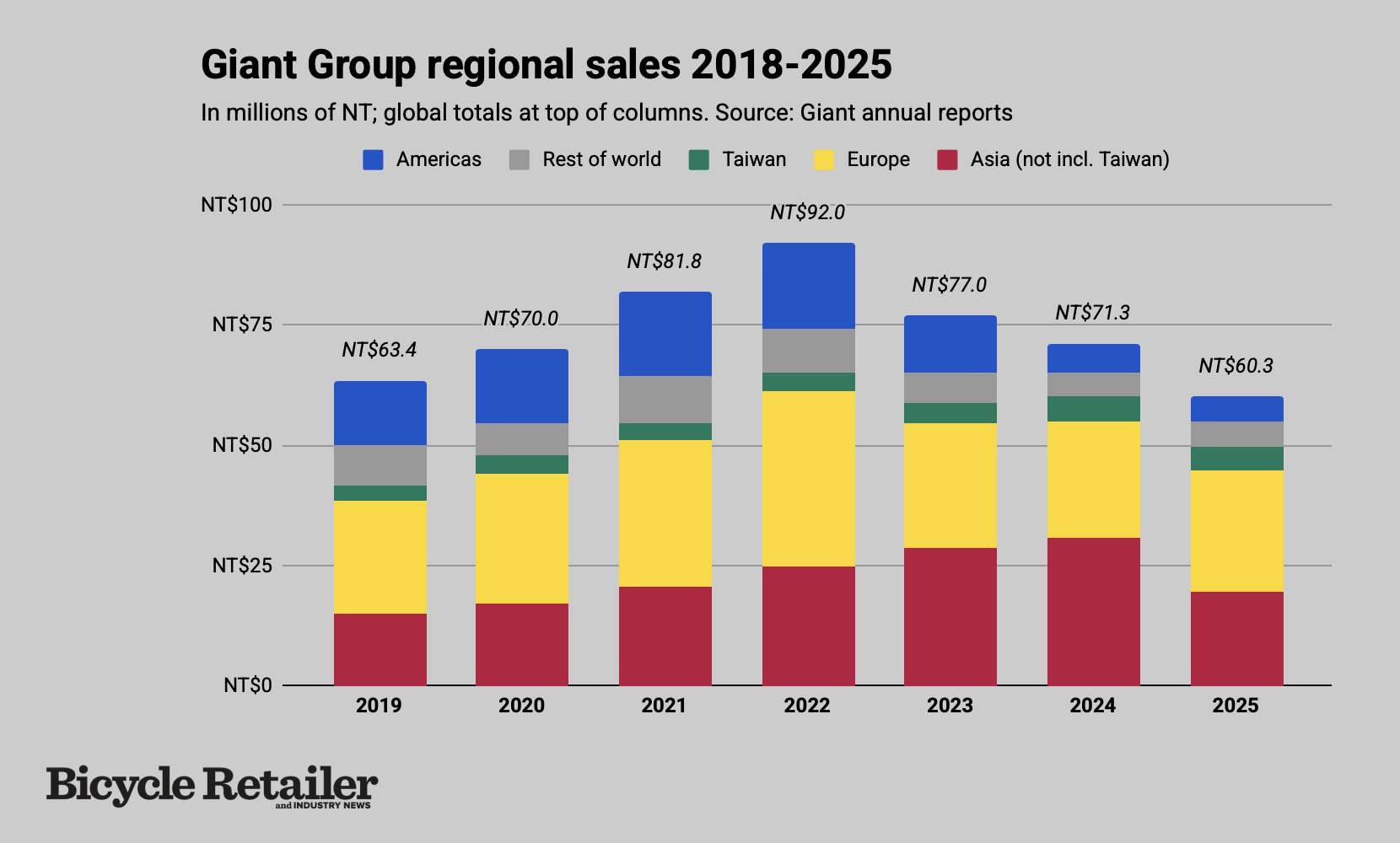
Like most major bike brands, Giant’s sales in the U.S. were on the decline following the post-COVID whiplash, so it’s difficult to separate WRO impacts from market conditions. The company’s sales in the Americas had declined to 9% of its global sales in 2024 and 2025 (down from as high as 22% as recently as 2020), while sales in Europe and China grew as a percentage of the total.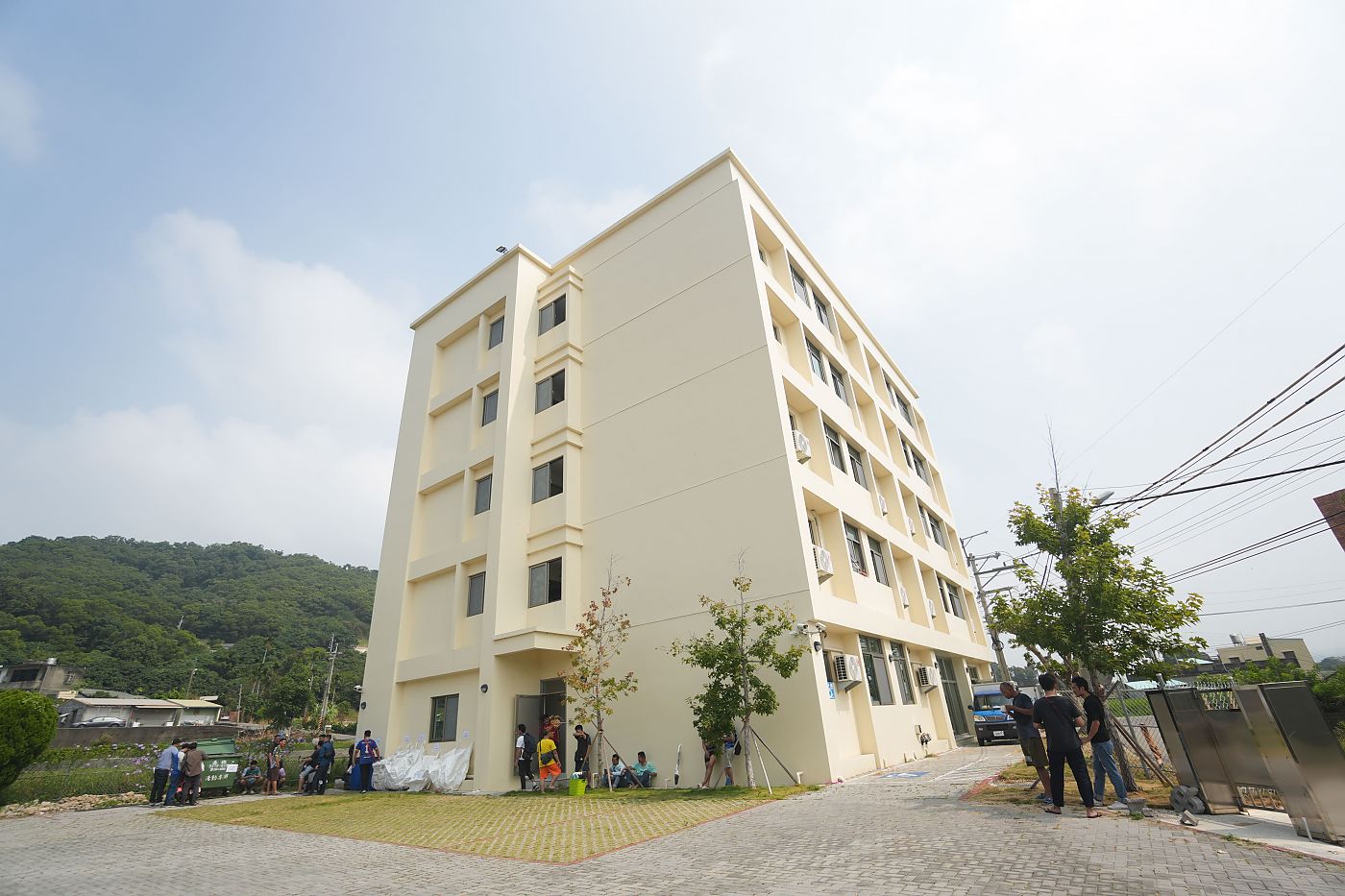
For the full year 2025, Giant’s sales in the Americas were NT$5.2 billion (about $162 million), down 16% from the year prior and down 66% from its 2021 sales at the height of COVID demand. The WRO only affected sales in the final quarter of 2025. The company does not release regional sales figures on a quarterly basis, although a June press release mentioned the WRO without specifics, noting that “the U.S. market remained under pressure due to the continued impact of the WRO issue on high-end product supply.”
The same release noted that new high-end product launches in May would improve sales in the European and Chinese markets. The prediction proved true: Giant’s global operating revenues were up 5.8% in May and 16% in June, the first monthly year-over-year growth in more than a year. July sales figures will be release around August 10.
U.S. Giant retailers tell BRAIN they have reduced their reliance on the brand since the WRO, in some cases picking up new suppliers to fill the gaps. The general manager of one competitor bike brand told BRAIN their brand has gained new retail distribution and marketshare thanks to the WRO. “Now we just need to maintain those new dealers when it ends,” the GM said.
Giant made little mention of the WRO in its 2025 annual report, which was released May 27. The report outlined Giant’s response to the labor allegations but didn’t detail costs or predict a resolution.
“We have responded to each of the five concerns individually and outlined specific measures that have been implemented or are currently being executed. Giant has formally submitted WRO revocation appeal documents and Corrective Action Plan (CAP) evidence to the U.S. Customs and Border Protection,” the annual report said in part.
Taiwan gets a break
Following the U.S. Supreme Court’s ruling that the Trump administration’s use of the IEEPA law to impose tariffs (including its “reciprocal” tariffs on most of the world), the administration has looked to the Section 301 law to impose tariffs.
Unlike the IEEPA law, which President Trump cited to impose and lift tariffs at will, Section 301 tariffs require a formal administrative process, including investigations and public comment periods. To impose the tariffs, the process must find nations in violation of trade rules, including forced labor practices.
Last month the administration announced new Section 301 tariffs of 10% and 12.5% on imports from most of the world, including Taiwan. However, Taiwan and EU members were given a break: The new Section 301 tariffs don't “stack” on top of existing MFN duties for imports from those regions. Since the previous 10% tariff, which the section 301 replaced, did stack, the new tariffs reduce the total tariff burden on many Taiwanese products. The new tariff approach (which is already being challenged in court by several importers) does not affect the WRO, however, so Giant will be unable to enjoy the Taiwan carveout, at least for now.

-
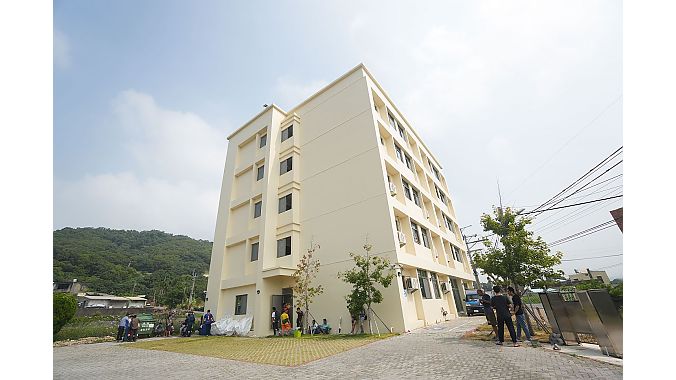 Giant updated its migrant worker dorms. Photo courtesy of Giant.
 -
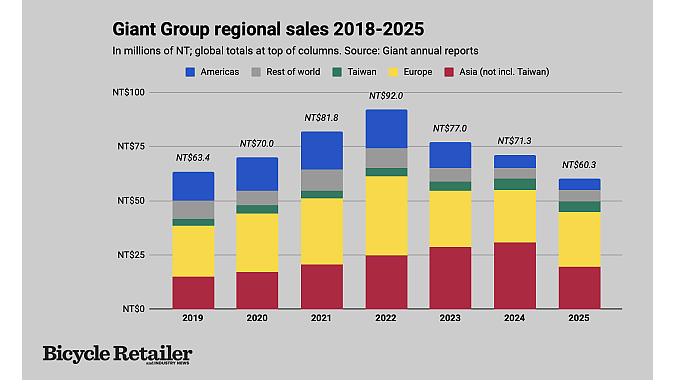 Giant's sales have declined in most regions since the pandemic. BRAIN chart.
 -
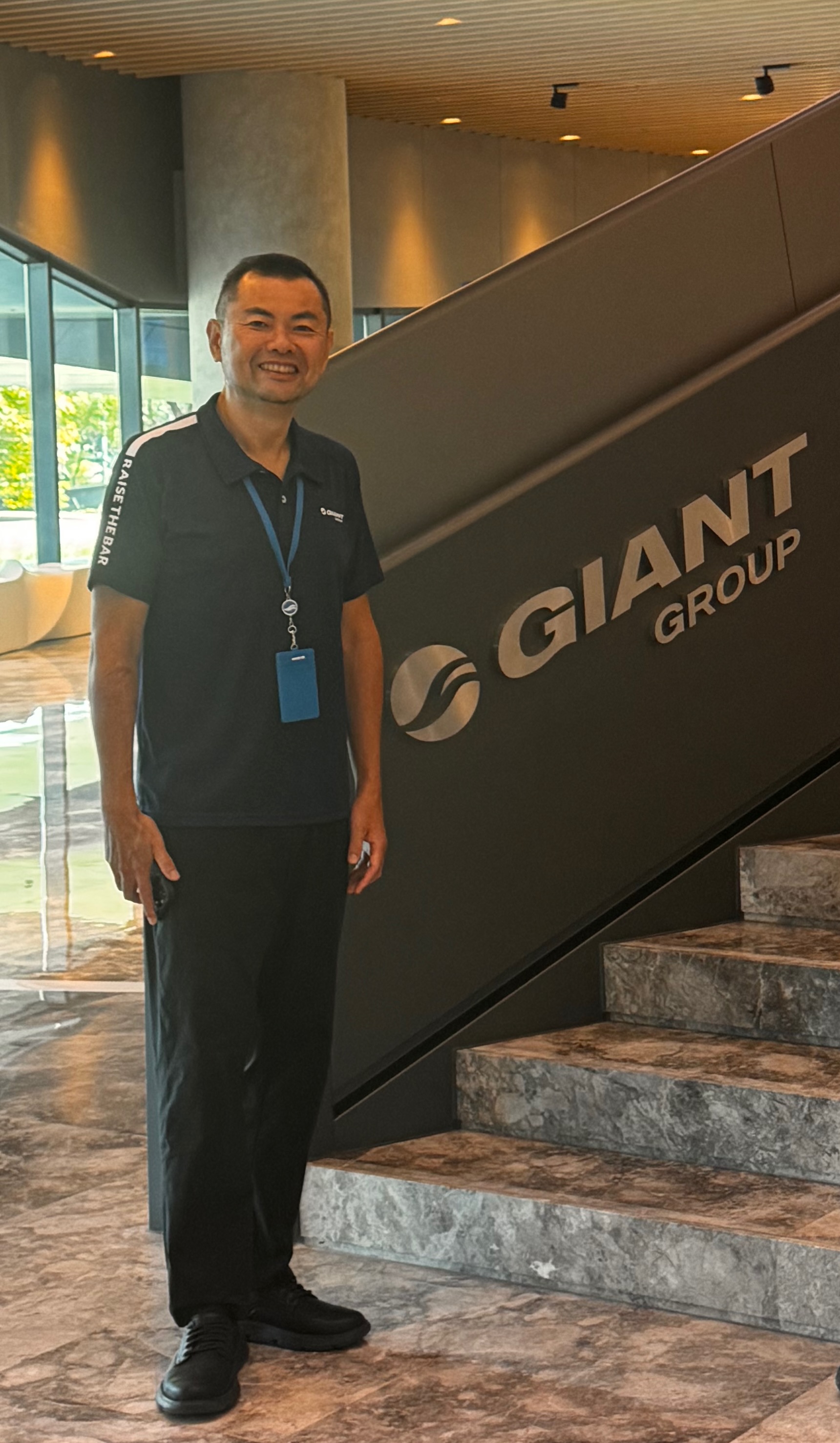
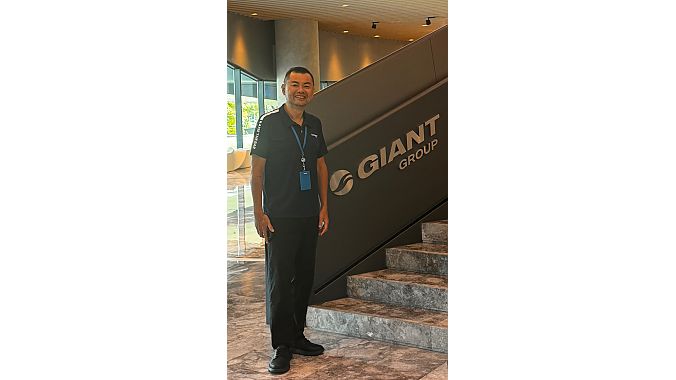 Giant spokesman Ken Li at the company's headquarters. Photo: Steve Frothingham
 -
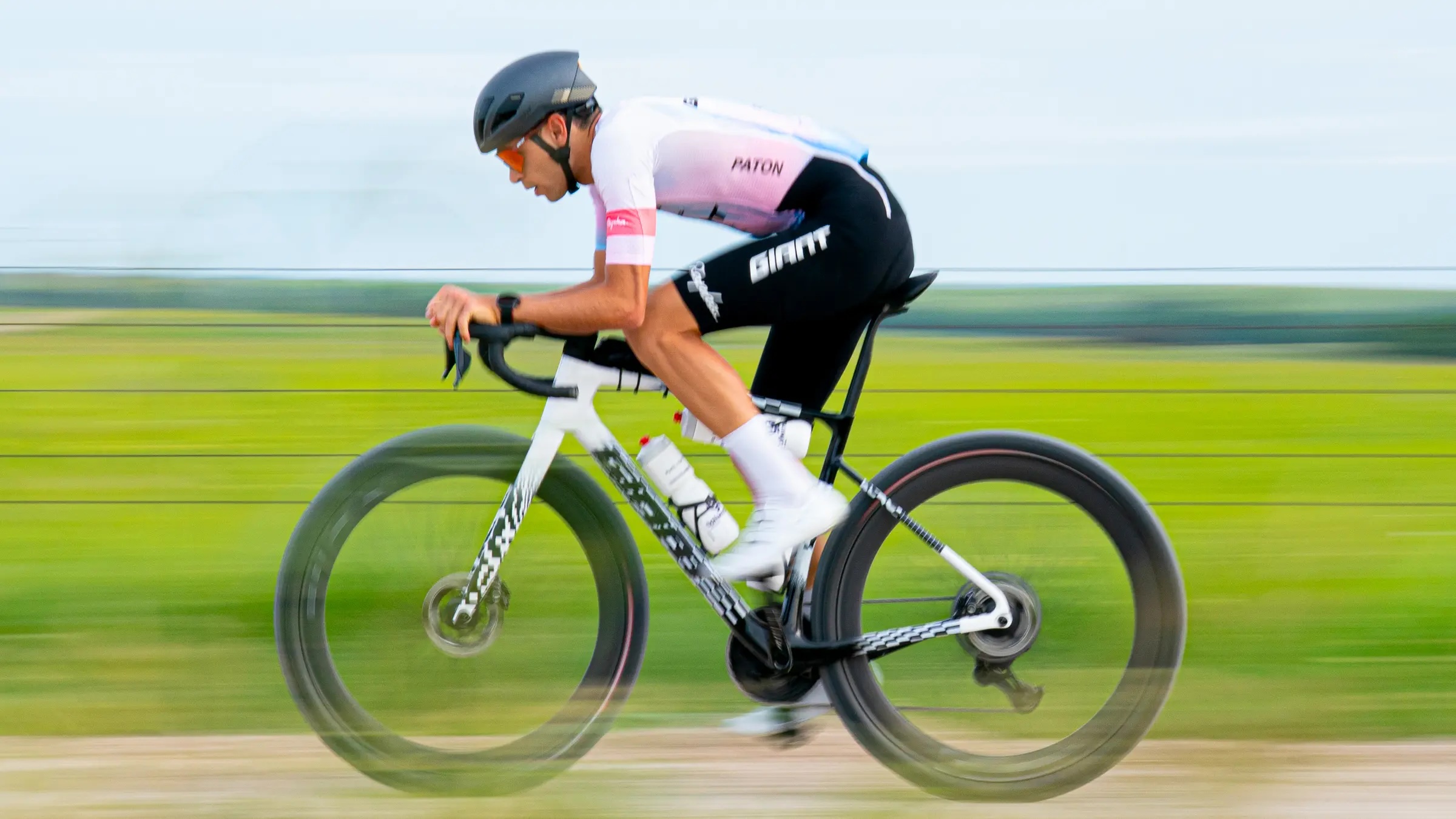
 The new Giant Revolt and Devote Advanced SL models are unavailable in the U.S.