A version of this article ran in the July issue of Bicycle Retailer & Industry News.
SEATTLE (BRAIN) — As a graduate student at the University of Colorado, Tripp Hurt co-authored two scientific papers on cycling shoe stiffness, examining how that stiffness affected sprint performance. The conclusion of both studies: It doesn’t.
“Ninety-nine percent of people, (a stiff shoe) does not give any performance benefit … there’s no benefit,” said Hurt, a former top runner whose degree is in mechanical engineering. After college he worked as a biomechanist at the Brooks running shoe brand before starting Brevay, a cycling shoe brand, with partners.
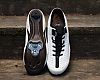
With stiffness ruled out as the most important factor, Hurt saw comfort and sustainability as the most important factors in a shoe. Both those factors led to a decision to use a sole made with flax fibers instead of carbon fiber. Production with flax has a much lower carbon footprint than carbon, he said, and the material dampens vibrations better, which adds comfort. The flax fiber might not have as high of a weight-to-stiffness ratio as carbon fiber, but Hurt’s studies concluded that stiffness is not the key to performance.
Also in the name of comfort, sustainability, and durability, the shoes feature natural cork insoles and a full-grain leather upper, instead of synthetics. Since cycling shoes are virtually impossible to recycle, durability is the best way to reduce environmental impact, he said, so Brevay chose to maximize durability by having the shoes made in Italy by a small-batch contractor who also makes cycling shoes for some other well-known brands.
Brevay’s name is an anglicized spelling of “brevet,” the timed, long-distance cycling events. Maintaining comfort during long events was a key aim.
Like a lot of runners, Hurt took up cycling due to knee injuries and he notes some differences in the cultures. For one, most competitive runners have training shoes and race shoes, opting for more comfort while training.
“That idea hasn't made it over to cycling,” he said. “A lot of times you see people training on their race bike, in their speedsuit, on their $600 shoe. But in reality, they might actually get better performance if they chased comfort instead of stiffness or aerodynamics. Chasing the ability to continue riding is more beneficial.”
Hurt continues to work full-time as a mechanical engineer for wearables at Meta, Facebook’s parent. Meta’s wearable products include the Ray-ban smart glasses. He is launching Brevay with Morgan Schank, a designer who has worked for Seattle’s Oiselle running brand and Outdoor Research.
The shoes will launch early spring next year, along with a natural fiber cycling sock. They will be available consumer-direct and through speciality retailers.
The shoes will retail for about $400, a premium price but still less than some new road shoes on the market from Q36.5, Specialized and others, Hurt noted. “We are premium, but maybe you could say we are mid-market premium,” he said.
After launching with the road shoe and sock, a gravel shoe and a natural fiber jersey are next on the Brevay development list, he said.